The 52/17 rule: DeskTime's original work-break study

DeskTime's 2014 research found that the most productive employees worked for 52 minutes, then took a 17-minute break.

Does the 52/17 rule still hold up?

Yes, as a principle, but not as a fixed ratio.

DeskTime's original 2014 study found a 52/17 work-break pattern among its most productive users. Later research found that the exact ratio changed as the workplace moved from office-first work to pandemic-era remote work and today's post-pandemic environment.

What remained consistent was the pattern behind the original finding: focused periods of work followed by meaningful breaks.

The 52/17 rule at a glance

2014 — The year DeskTime first published the finding

52 min

Average focused work period in the original study

17 min

Average break between focused work periods

Top 10%

DeskTime users with the highest productivity ratings

What is the 52/17 rule?

The rule comes from DeskTime's 2014 analysis of its most productive users.

DeskTime looked at the workday habits of the most productive employees and found that, on average, they worked for 52 minutes before taking a 17-minute break.

The research reflected an office-first working world, before widespread remote and hybrid work transformed how millions of employees structure their days. DeskTime's most productive users were not spending hours at their computers without interruption. Their workdays naturally alternated between periods of concentrated work and substantial periods of rest.

That pattern became known as the 52/17 rule.

What did DeskTime's most productive employees do differently?

The original study pointed to a work rhythm built around periods of concentration rather than continuous computer use.

What made the finding interesting was that we hadn't prescribed a schedule for employees to follow. We analyzed how they were already working and discovered a shared pattern among our most productive users.

Unlike productivity methods built around predetermined timers, the rule of 52 emerged directly from real workplace behavior.

The finding went on to receive international attention, including coverage from The Washington Post, TIME, Fast Company, Inc., and The Muse.

52/17 vs. the Pomodoro Technique

The 52/17 rule is often compared with the Pomodoro Technique because both combine periods of focused work with regular breaks. But their origins are very different.

Different work-break intervals

The 52/17 rule follows 52 minutes of work with a 17-minute break. The Pomodoro Technique typically uses shorter intervals of 25 minutes of work followed by a 5-minute break.

Research findings vs. a planned routine

DeskTime's 52/17 rule comes from observed work habits among highly productive users. The Pomodoro Technique is a structured time-management method designed around predetermined intervals.

A pattern to learn from vs. a method to follow

The 52/17 rule describes how productive employees naturally organized their workdays. Pomodoro gives you a schedule to follow, making it a more prescriptive approach to managing focus and breaks.

How we studied the 52/17 rule

We analyzed the work patterns of DeskTime's most productive users to see how they naturally structure periods of work and rest.

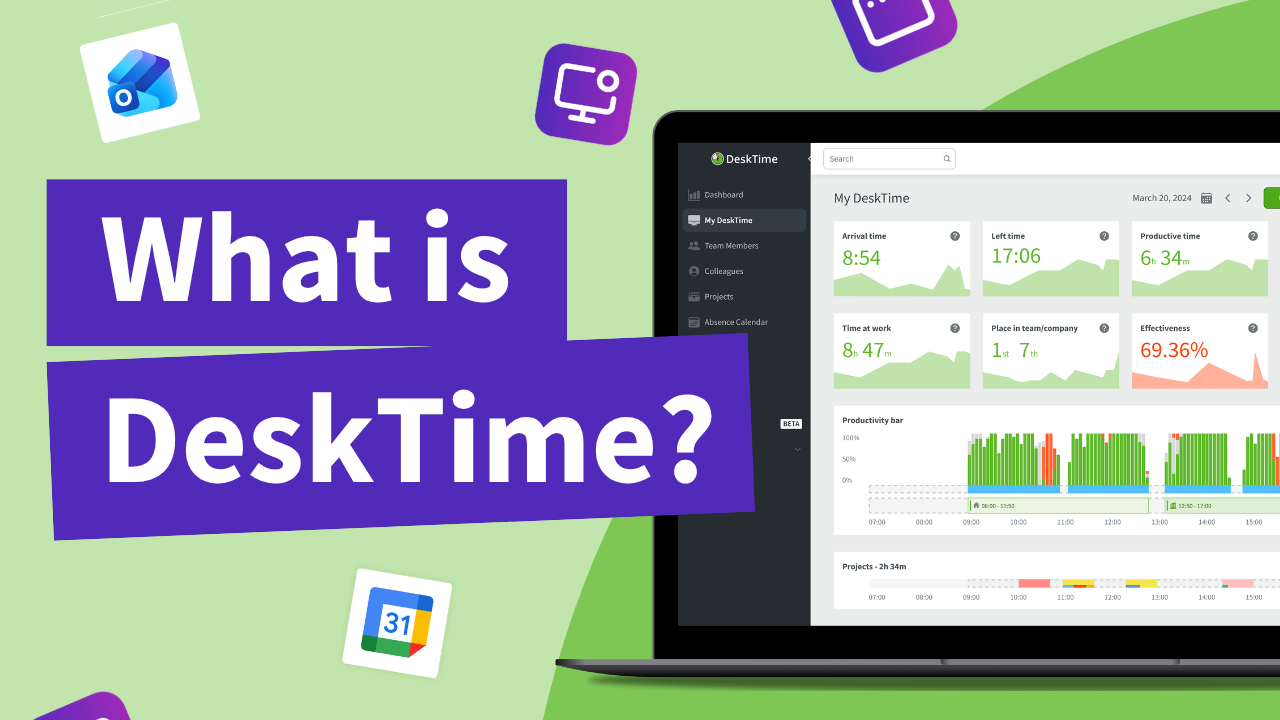
DeskTime is automatic time tracking software that automatically records computer activity, including time spent on apps and websites. This helps us identify periods of productive work and examine how they alternate with breaks.

For our original 2014 study, we analyzed the work patterns of our most productive users, comparing the length of their productive work sessions with the breaks between them.

This revealed a common rhythm that became the foundation of the 52/17 rule.

What does the 52/17 study mean for your workday?

It’s less about following an exact timer and more about making real breaks part of focused work.

DeskTime's most productive users did not work continuously for hours. They alternated focused periods of work with substantial breaks before returning to their tasks.

Later, DeskTime research found different work-break ratios, reinforcing that 52 minutes and 17 minutes are not magic numbers. The lasting takeaway from the original study is the rhythm itself: focus on your work, take enough time to properly disconnect, then return refreshed.

See how the work-break ratio evolved

There's more in the data

Explore more of our research into breaks and focus, remote and hybrid work, AI adoption, global work patterns, and how the modern workday continues to change.

For journalists & researchers

Reach our team directly for data requests or interviews.

Frequently asked questions

The 52/17 rule comes from DeskTime’s original 2014 productivity research. We found that the most productive 10% of DeskTime users worked for an average of 52 minutes before taking a 17-minute break.
Yes, as a principle, but not as a fixed ratio. Later research by DeskTime found that work-break patterns changed as workplaces evolved. The ratio shifted to 112/26 during the pandemic and 75/33 in our latest study using 2024 data.
You can, but the exact timing isn't essential. DeskTime research shows that highly productive employees take meaningful breaks between focused work periods, even as the average length of those periods changes.
DeskTime analyzed tracked computer activity among the top 10% users by productivity rating in 2014. By examining their productive work periods and breaks, we identified the average 52-minute work and 17-minute break pattern.
No. A typical Pomodoro Technique example asks you to work for 25 minutes and then take a five-minute break. Pomodoro timing gives you a structure to follow.

The 52/17 rule works the other way around. DeskTime observed highly productive employees and identified the work-break pattern they were already following.

So while a 52/17 timer can be used as a productivity technique, the original research was an observation of productive behavior, not a prescribed schedule.