Employee well-being starts here
It’s not about another workplace well-being course. What your team really wants is flexibility, trust, and clarity in how they work. Learn how DeskTime can help make that happen.
How workplace well-being impacts your team
According to data from Gallup, employee wellness drives engagement, cuts burnout, and slashes costly turnover, directly impacting your bottom line.
Happy teams perform better
When employees feel workplace well-being is a priority, they’re 4.4 times more likely to be engaged at work. That means more focus, better teamwork, and stronger results. Simply put, caring pays off.
Well-being protects profits
Employees with well-being support are 73% less likely to burn out, reducing turnover and lost productivity. Often, it’s smart policies, clear goals, and flexibility that protect your bottom line.
Cut turnover costs
Replacing employees drains time and money. When employee well-being is a priority, people are 53% less likely to job hunt. A supportive culture keeps talent and reduces hiring costs.
Ensure employee wellness with time tracking
With the right time tracking tool, you can support employee well-being, build trust, and create a flexible, high-performing workplace.
Offer employee-friendly policies
These days, it’s harder for companies to attract great talent. It’s not just about pay—people want better benefits, flexibility, and a focus on employee well-being. Time tracking is an easy, affordable way to support employee wellness through flexible hours, work-from-anywhere, hybrid work, and even shorter workweeks, all without sacrificing productivity.
Improve office culture
Time tracking often gets a bad rap, but when used right, it can boost workplace well-being and highlight the importance of employee well-being. The right tool balances workloads, gives employees more control over their time, and reduces micromanagement, cutting down on timesheets and constant check-ins. It’s all about trust and flexibility.
Make conflict resolution easy
You can’t solve a conflict if you don’t know what really happened. Time tracking helps leaders spot issues early and make fair calls. It’s a helpful tool for leadership and employee well-being, giving HR the facts they need. It also supports employee wellness by creating a more transparent, balanced workplace.
Improve workplace well-being with DeskTime
These DeskTime features are designed to support your team’s well-being and create a healthier, more balanced work environment.
A time tracker that won’t interrupt your team’s workflow. Ever.
Forget manual entries and distractions. With DeskTime, time tracking runs on autopilot—zero effort needed.
How DeskTime works
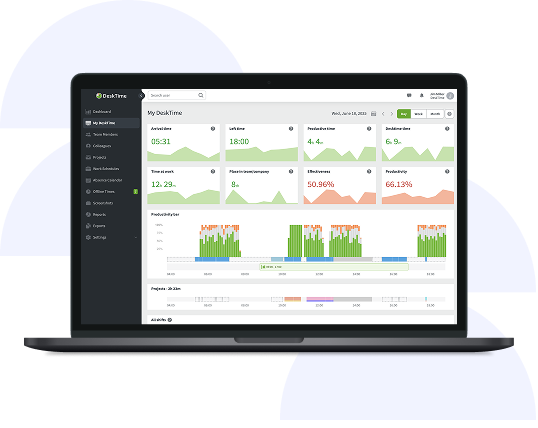
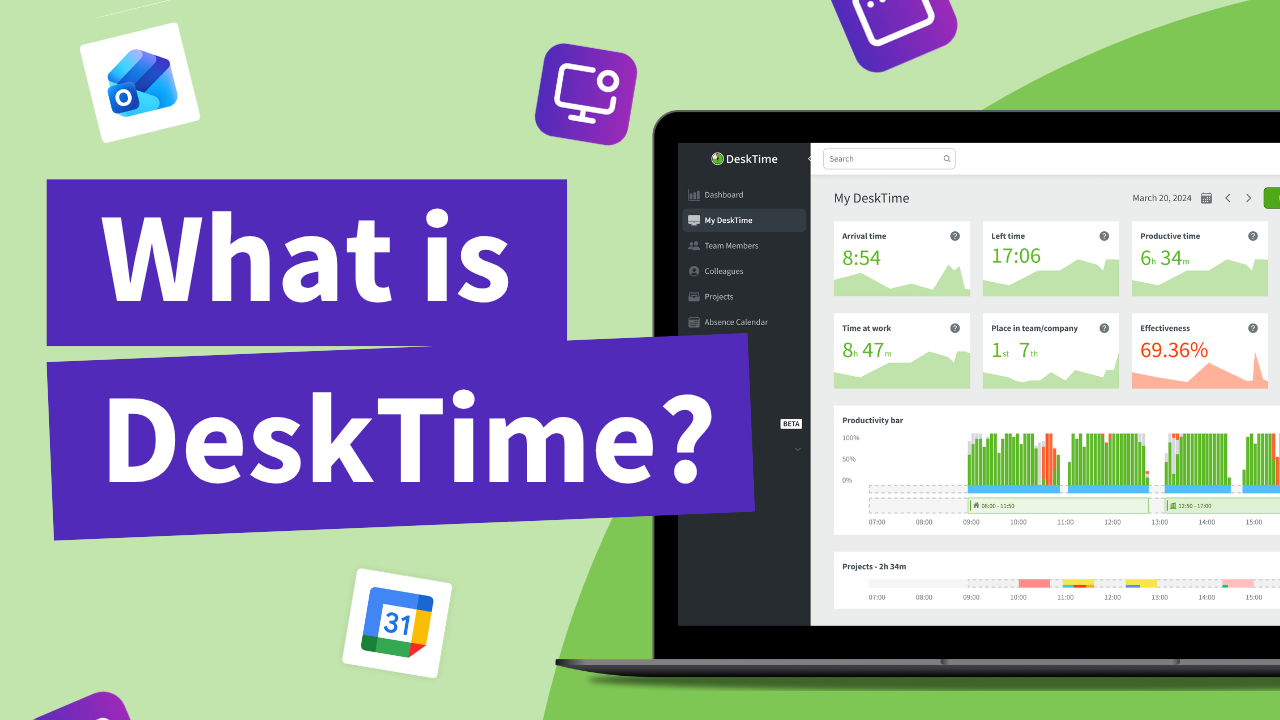
With DeskTime, you can see your employees' arrival and departure times, analyze their productivity, schedule shifts, oversee absences, maintain a healthy work-life balance, keep track of specific projects, and more.
What if my employees hate DeskTime?
When employees fear being misunderstood or micromanaged, they resist time tracking. Openness and trust turn it into something helpful.
After more than a decade in the business, we’ve seen it time and time again—when employees push back against time tracking, it’s rarely about the tool itself. Most of the time, it comes down to uncertainty and fear. They worry it won’t reflect their work fairly, they’re unsure what management is trying to measure, and they don’t want to feel reduced to a bunch of numbers they can’t control.
That’s where trust and transparency come in. With open communication and clear guidelines, time tracking can shift from feeling like surveillance to something that supports your team, not controls them.
Success starts with a smart rollout
How you start with time tracking makes all the difference. Skrivanek used DeskTime to enable remote work. See how they got their team on board without disrupting trust or workflow.
Frequently asked questions
Tools like time tracking can support this by offering insights into workloads and work habits, helping prevent burnout and promoting fairness. When employees feel trusted and have visibility into their own performance, they’re more engaged and motivated. Supporting employee well-being isn’t just the right thing to do—it’s also a smart investment in your company’s success.
When well-being is prioritized, teams are more engaged, less likely to burn out, and more likely to stick around. It builds a culture of trust, where people feel like more than just numbers. And the truth is, when employees are well, the whole business runs better. Supporting well-being isn’t a nice-to-have—it’s one of the smartest decisions a company can make.
Tools like time tracking can also help spot workload imbalances or overwork before they become bigger issues. It’s not about spying—it’s about understanding. When employees feel safe, heard, and supported, their well-being shows in how they show up. Measuring well-being means listening, observing patterns, and making space for honest feedback. It takes effort, but the payoff is a healthier, happier team.
Using time tracking tools can be a great way to support both employees and managers by keeping that balance in check without adding stress. It’s all about finding what works for your team and making well-being part of the everyday culture.
Use tools like time tracking not to micromanage, but to spot overload and support balance. Prioritize open communication and lead with empathy. Remember, small changes, like respecting time off or checking in regularly, can make a big difference. You don’t need grand wellness programs to show you care. A workplace that values well-being is one where people feel safe, respected, and ready to do their best.
Time tracking can prevent burnout by highlighting overwork, making workloads more manageable, and even supporting flexible schedules. The key is trust and transparency. When employees understand the “why” behind time tracking and feel like they’re in control of their data, it stops feeling like surveillance and starts feeling like support.
When teams feel supported and trusted, they perform better naturally. Time tracking tools can complement wellness programs by helping managers understand workloads and allowing employees to have more control over their time. This balance between employee needs and business goals creates a healthier, more productive workplace for everyone.
Book a 1:1 introduction call
Planning to onboard a large team of 20+ users?
Schedule a chat with our product expert to learn how DeskTime can be tailored to fit your needs and requirements.