How did the work-break ratio change after 2020?
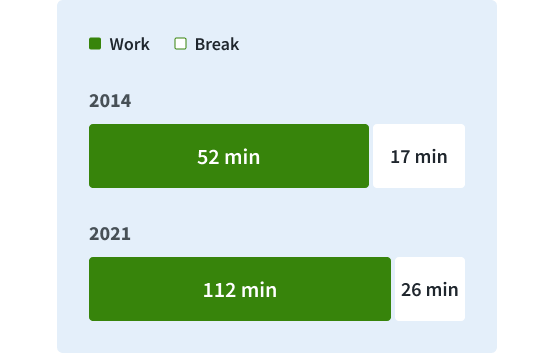
We revisited our original 52/17 study to see how the shift to remote work had changed the way productive employees work and take breaks.
DeskTime first studied the work-break habits of our most productive users in 2014. Since then, we've revisited the data to understand how those habits have evolved as workplaces shifted from offices to remote and hybrid work.
Our original research revealed the now-famous 52/17 rule: the most productive employees worked for 52 minutes, followed by a 17-minute break.
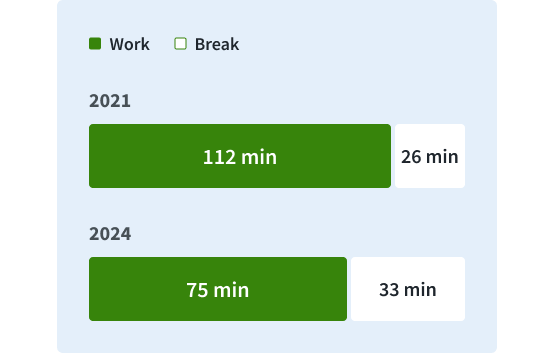
Using 2024 data, we revisited it again. This time, we found a 75/33 ratio, with shorter work periods and longer, more frequent breaks than during the pandemic.
Across our studies, we can see the work-break rhythm changing alongside the workplace itself, from office-first work to remote work and today's post-pandemic environment.
The post-pandemic shift at a glance
Pandemic-era work period
Post-pandemic work period
Average break post-pandemic
Productive users analyzed
How we studied changing work-break patterns
We analyzed DeskTime productivity data to understand how the work and break habits of our most productive users evolved after 2020.
DeskTime analyzed productivity data from about 6,000 users in the top 10% by productivity rating, covering January to December 2024. Productivity rating is the share of a user’s time spent in productive apps and websites versus unproductive ones. DeskTime compared their work and break patterns with its earlier study of pandemic-era remote work, which found 112 minutes of work followed by 26-minute breaks.
Want to know more about the data behind our research? Learn what DeskTime tracks.
What happened during the pandemic?
During the height of the pandemic, our most productive users worked much longer before stepping away from their computers.
Our 2021 study found a 112/26 work-break ratio, meaning highly productive employees worked for almost two hours before taking a break.
This was a major departure from our original 52/17 finding, which came from an office-first working world.
The 112/26 pattern emerged during a period when working from home had become the norm for millions of employees. In this data, productive employees spent considerably longer stretches at their computers before taking time away.
What changed after the pandemic?
By 2024, we found that work periods had shortened by 37 minutes while average breaks had grown by seven minutes.
Our 2024 findings revealed a 75/33 work-break ratio, a notable shift from the longer work stretches observed during the pandemic.
Productive employees were stepping away from their computers sooner, taking longer breaks, and doing so more frequently throughout the day.
This suggests that the change went beyond shorter work sessions. The overall rhythm of the productive workday had shifted, too.
Could hybrid work be the sweet spot for productivity?
DeskTime's CEO Artis Rozentals offers his take on what our latest findings reveal about changing workplace habits.
“I believe the change we're seeing in work-break patterns may be linked to employees returning to the office and adopting hybrid work.
During the pandemic, people working from home tended to spend longer periods at their computers. Now, office days bring back natural interruptions, from conversations with colleagues to coffee breaks.”
There's more in the data
Explore more of our research into breaks and focus, remote and hybrid work, AI adoption, global work patterns, and how the modern workday continues to change.