


What is AI workslop—and what should you do about it?

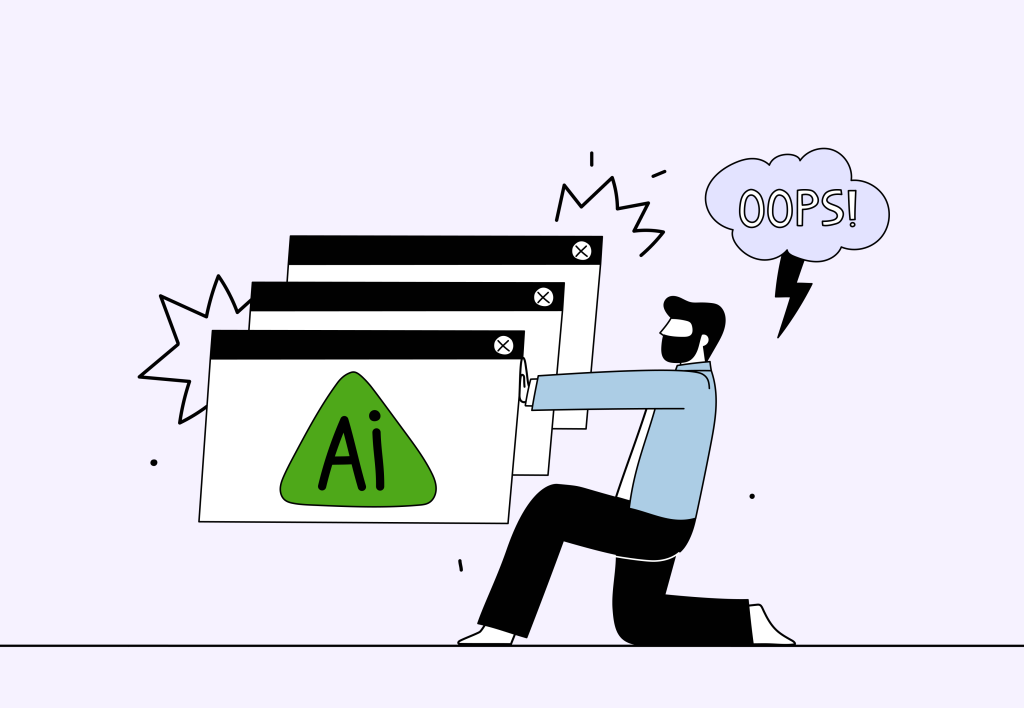
Are you guilty of AI workslop?
Let’s be real, artificial intelligence has changed how we work. It drafts, summarizes, analyzes, translates, codes, and presents. Used well, it can save hours and free up your team to focus on the work that actually requires human judgment.
But there’s a growing problem spreading through workplaces—and you’ve almost certainly encountered it, even if you didn’t have a name for it.
Want to get the most out of your time?
Try DeskTime for free!
Try free for 14 days · No credit card required.
By signing up, you agree to our terms and privacy policy.
Picture this: a colleague sends over a report ahead of an important meeting. It looks thorough. The formatting is clean, the language is confident, the sections are all there. Then you start reading it properly and something feels off. A statistic that doesn’t match the source. A recommendation that contradicts the data it’s supposedly based on. Whole paragraphs that sound plausible but say nothing.
And then it dawns on you: your colleague opened their favorite AI tool, hit “generate”, skimmed the output, and shipped it without a second thought. Now all the real work—the fact-checking, the sense-checking, the rewriting—is on you. And if that makes you angry, you’re not alone.

1. What is AI workslop?
AI workslop meaning: work that has been generated or heavily assisted by AI, looks polished on the surface, but is flawed, unverified, or just plain vacuous—and gets submitted without adequate human review.
The name is a mashup of “work” and “slop”, which in AI circles refers to low-quality, mass-produced AI output. Workslop is that same phenomenon applied to the professional context: content that passes the visual inspection but fails the moment anyone engages with it seriously.
Crucially, it’s not malicious. The colleague who sent that report probably didn’t intend to waste your time or mislead anyone. The AI output looked good enough so they just sent it and moved on. But that’s what makes it so dangerous—it doesn’t feel like a problem until someone else has to clean up the mess.
When AI workslop takes hold, the time saved in generation is simply transferred to someone else in the form of correction—or worse, it’s never corrected at all, and bad information starts circulating as fact.

Want your business to thrive?
Boost your team’s productivity and efficiency ratings with time tracking!
2. AI workslop examples you’ve probably already encountered
Reports and long-form documents. An AI can produce a well-structured, fluent 2,000-word report in seconds. What it can’t do is know whether the claims are accurate, whether the framing matches your company’s actual situation, or whether the conclusion makes strategic sense. That’s where human expertise and judgement are key—but if they’re not applied, then all you’re left with is AI workslop.
Data analysis and presentations. AI tools can generate charts, summaries, and narratives around numbers quickly—but they can also produce graphs that are technically coherent and analytically meaningless. A slide deck full of visualizations that don’t actually support the argument, or a trend that’s been pulled from the wrong dataset, can send a team in entirely the wrong direction.
Emails and communications. AI-generated messages can be grammatically correct and completely miss the point—wrong tone for the relationship, generic framing that ignores the specific context, or details that are subtly (or not so subtly) wrong. In client-facing communication, this erodes trust. Internally, it just creates confusion and unnecessary back-and-forth.

3. 5 reasons why the AI workslop workplace phenomenon is a real problem for managers
If left unchecked, AI workslop effects can balloon into a big problem that can eat away at the team and even endanger the company. Here’s how:
1. It makes your team less efficient, not more. The time saved by the person who generated the workslop is paid for by everyone who has to review, correct, or act on it. Across a team, this is often a net loss.
2. It makes it harder to evaluate competence. When you can’t tell how much of someone’s output is theirs versus an AI’s—and the AI parts haven’t been properly reviewed—you lose visibility into what your team actually knows and can do. That makes performance conversations, hiring decisions, and delegation much harder, putting you at risk of promoting/trusting the wrong people.
3. It spreads misinformation internally. An incorrect claim in one report gets referenced in the next, and the one after that. Over time, decisions get made on the basis of information that was never accurate to begin with.
4. It creates reputational and legal risk. Internal workslop is a productivity problem. External workslop can damage relationships, credibility, and in regulated industries, create genuine legal exposure. AI doesn’t know what it doesn’t know, and neither will your client when they’re reading a confidently-worded error.
5. It’s disrespectful. This one is easy to overlook, but it matters. Submitting unreviewed AI output to a colleague or manager is, implicitly, a signal that you don’t think their time is worth the effort of checking your work. Over time, that erodes the culture of care and accountability that good teams run on.

4. How to reduce AI workslop in your workplace
Let’s be real—eliminating AI workslop completely is likely a fool’s errand. Today, work is extremely accelerated and an endless barrage of deadlines means people will cut corners, even against their better judgement.
But you should still put in effort to educate and guide the team in order to minimize workslop as much as possible and help avoid the negative AI workslop effects discussed so far. Here are three things you can do:
Establish an explicit AI etiquette—and hold people to it. The most effective thing a team can do is make expectations concrete. That means deciding, as a team or organization, what responsible AI use looks like: that AI output must be reviewed before submission, that the person submitting is accountable for every claim regardless of how it was generated, and that “the AI wrote it” is not an acceptable explanation for an error. Put it in writing and talk about what is and isn’t AI workslop.
Call out workslop when you see it. This may be uncomfortable, but it’s necessary. If a colleague sends you something that’s clearly unreviewed AI output, name it. Letting it slide normalizes it and a culture where workslop is quietly accepted is a culture where the standard of work gradually degrades.
Invest in AI training. A lot of workslop isn’t the result of laziness so much as a lack of skill. Using AI tools well—knowing how to prompt effectively, how to verify outputs, how to integrate AI into a workflow without outsourcing your judgment—is a genuine competency, and most people haven’t been taught it. So if you’re a manager pushing for more AI use in the workplace, make sure that your team knows how to use it.
5. Want to understand how your team actually spends their time?
If the AI workslop is a concern in your workplace, it’s often a symptom of a deeper question: do you have real visibility into your team’s productivity and working patterns? For instance, there’s a real possibility that if your team has issues with AI workslop, it’s not laziness or carelessness, but rather your team being overworked and not having the bandwidth to approach tasks properly.
DeskTime gives you that visibility—automatically tracking time, identifying patterns, and helping you understand where working hours actually go, so you can manage smarter and support your team better.
Our experts would love to hop on an intro call with you to talk about how DeskTime can help your company move the productivity needle. You can book one here.

Did you find this article useful? Give it a clap!
Psst! You can clap more than once if you really loved it 🙂