


What happens when the public sector tracks time? One institution’s 12% productivity gain


Over time, this blog has explored the benefits of time tracking for businesses and teams of all sizes. One group, however, has received far less attention: governmental institutions. This is surprising, considering that public institutions are among those most closely scrutinized for efficiency, transparency, and responsible use of resources.
In reality, ministries and other government bodies can benefit from time tracking just as much as private companies. A compelling example comes from the Ministry of Economics of Latvia, where a year-long time tracking trial led to a 12% increase in productivity, faster decision-making, and shorter coordination cycles. Here we share their case study to show how time tracking can help public-sector organizations streamline workflows and deliver better results.
Want to get the most out of your time?
Try DeskTime for free!
Try free for 14 days · No credit card required.
By signing up, you agree to our terms and privacy policy.
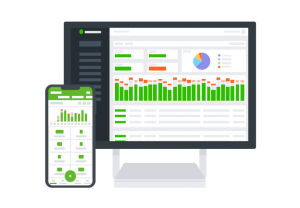
Introducing time tracking at the Ministry of Economics
The aim of Latvia’s Ministry of Economics experiment was to analyze the ministry’s work processes, time use, and working methods to make its work faster and more efficient. In February 2025, the time tracking and analytics tool DeskTime was introduced at all levels of the institution. The results show that employee productivity has since increased from 80% to 92%, with the staff spending on average 7.3 hours a day on direct work tasks.
“When implementing DeskTime, our goal was to obtain objective data to improve processes, not merely to track hours worked. The results confirm that we are on the right path. Decisions are made faster, coordination cycles are becoming shorter, and the productivity of ministry employees has increased since the tool was introduced. Compared to 80% a year ago, the productivity indicator has now reached 92%. Such growth is a direct testament to the professionalism, engagement, and ability of the Ministry of Economics’ employees to adapt to change,” says Minister of Economics of Latvia Viktors Valainis.
DeskTime data shows that the ministry’s employees spend 92% of their office hours on direct work tasks, such as drafting documents, email communication, and analytics.
Why measuring government productivity matters today
72% of Europeans believe the EU to be very or fairly bureaucratic, while only 20% believe it is not, or not at all bureaucratic. This reflects the general sentiment that government, in Europe particularly, is mired in inefficiencies. This is commonly considered to be at the expense of public interest and globally has led to populist initiatives, such as DOGE under the Trump administration, to reduce government spending and institutional size. Latvia’s experiment illustrates that government productivity can be optimized with data-driven management.
By using DeskTime as a management tool rather than a control tool, the Ministry of Economics of Latvia can plan employee workloads and other resources more efficiently. This not only improves public service quality but also improves staff wellbeing.
In the next phase of the pilot, the ministry plans to integrate DeskTime’s data with its document management system, which would allow linking screen time with the real outcomes – namely, the quality of drafted legislation and the speed of its review.
“I am pleased that this pilot project has delivered results, making it possible to analyze the effectiveness of public administration work based on real data. The cooperation has also resulted in recommendations from ministry specialists, which have given us the opportunity to further improve DeskTime so that it is even better suited to public-sector clients,” says Artis Rozentāls, CEO of DeskTime.
The high productivity is also the result of the ministry’s openness to new technologies, such as AI. According to DeskTime data, employees are increasingly using AI tools for routine tasks, like data analysis and drafting executive summaries. Such modernization of public services across EU governments through AI and other deep-tech innovations could save up to €450 billion annually, according to a 2025 study by ECIPE.

Did you find this article useful? Give it a clap!
Psst! You can clap more than once if you really loved it 🙂