


The AI efficiency paradox: Why faster tools are leading to longer European workdays

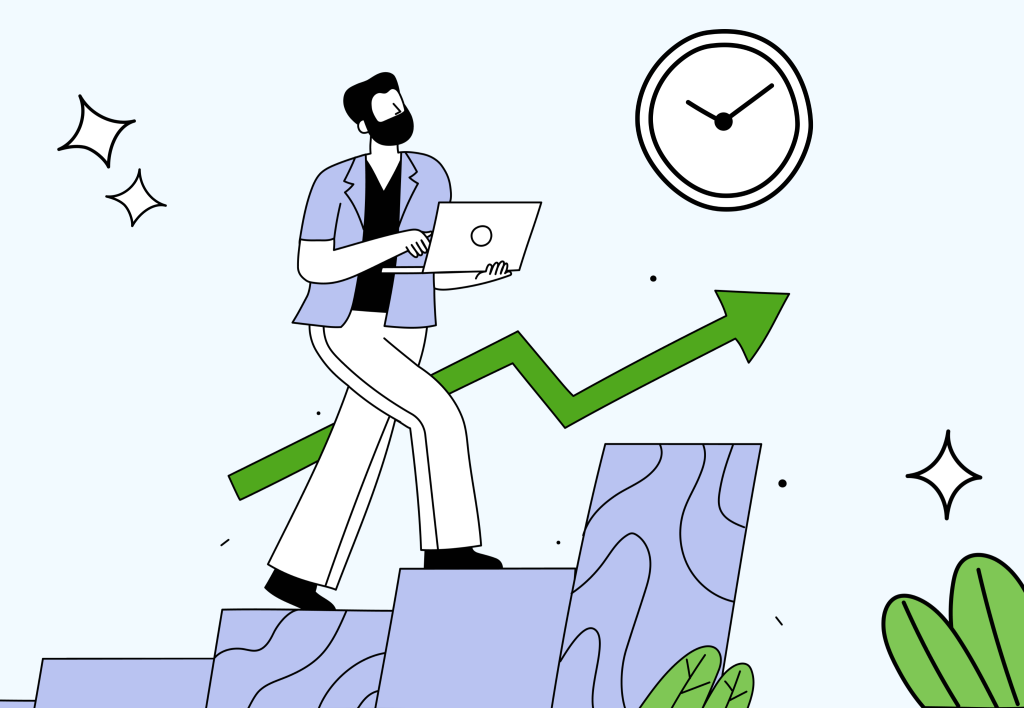
Generative AI and automation were supposed to give Europeans something priceless: time. Speed up the drafting, facilitate the admin, shrink the backlog—and the workday should feel a little easier.
But the opposite is happening. The explosion of generative AI and advanced automation hasn’t shortened European workdays. If anything, it has made them longer—and pushed their pace even higher. What looks like productivity is often synthetic efficiency: work expands to fill the time AI was meant to free up, and the extra capacity gets converted into more deliverables, not earlier log-offs.
Recent workplace trends point in the same direction: when people become faster with AI, organizations rarely bank the time. They translate it into more work—stretching the workdays even longer.
Want to get the most out of your time?
Try DeskTime for free!
Try free for 14 days · No credit card required.
By signing up, you agree to our terms and privacy policy.
Data shows the 8-hour day under pressure
Europe may still be one of the last global strongholds of the protected 8-hour day, work-life balance and the right to disconnect. In India, for instance, nine-hour workdays are the legal norm within a 48-hour weekly limit, and six-day workweeks are widely practiced. Meanwhile, the U.S. remains the cradle of “hustle culture,” where reports consistently highlight that for knowledge workers, the traditional 40-hour week is a floor, not a ceiling.
However, recent data suggests a quiet but steady erosion of the European workday, indicating that the 8-hour boundary is beginning to fray. Using DeskTime’s aggregated, anonymized time-tracking data from around ten thousand European users, our team examined how working patterns have shifted over the past two years—aligning closely with the period when the AI boom took off. We found that the average workweek rose from 40 hours in 2023 to 41.4 hours in 2025.
While an extra 1.4 hours per week may seem negligible, it represents a systemic shift. When aggregated, it adds up to almost two extra weeks of work per year.
Want to understand where your time goes?
Use time tracking software for a clear overview!
Where does our saved time disappear?
The question that keeps me up at night as a productivity expert is simple: if our tools make us 10% or 20% faster at drafting, coding, or analyzing, why aren’t we walking out the door 10% earlier?
Using AI tools indeed saves up time that we previously spent on doing manual or repetitive tasks. The sad truth is that these saved minutes are usually scattered between meetings, prompts, and context-switching. The brain never gets the chance to truly reset, leading to a workday that’s not only longer, but also faster-paced and more exhausting, despite the “help” from AI.
Even more so in hybrid environments, workers often feel they must prove they are working alongside their AI tools by being hyper-available on chat platforms. As AI handles the heavy lifting of output, many digital dashboards unintentionally reward responsiveness over deep results. Workers feel a mounting pressure to prove they are working harder than the AI by maintaining a constant, hyper-available digital presence, staying tethered to the screen.
Consequently—and compounding the pressure on workers—efficiency is increasingly used as a catalyst for downsizing rather than liberation. Companies like Klarna, IBM and many others have already signaled plans to significantly shrink their headcount, shifting the burden of maintaining massive output onto a leaner team of remaining employees who must now manage both their own roles and the AI that replaced their colleagues.

The explosion of noise
Communication has never been faster—or harder to escape. Email feels “so yesterday”, replaced by Slack pings from dozens of channels, with work talk spilling into private spaces like WhatsApp.
And because it’s now effectively free to generate a report, a recap, or a project update, internal noise has exploded. Any minutes saved by a faster workflow are quickly swallowed by the surge of notifications, check-ins, and micro-deadlines that follow. With collaboration and workflow tools smashing every old boundary, a new question emerges:
What is the hidden cost of this ease?
For one, it is your focus. The saved minutes are usually scattered and shallow—micromoments that are immediately filled by the next incoming prompt or message. The cognitive load remains constant because the brain never gets a true reset. We are losing the deep work blocks, replaced by a fragmented schedule that feels more exhausting despite being assisted by technology.
Second, it’s your well-being that may be put at risk. A study by Dr. Gloria Mark, professor of informatics at the University of California, Irvine, found that frequent attention-switching—driven by a digital environment where the average screen focus has shrunk to just 47 seconds—is directly correlated with increased physiological stress, including a rising heart rate and blood pressure.
Finally, saving five minutes here and there throughout the day through AI shortcuts does not equal a meaningful hour of downtime at the end of the day. Rest isn’t a light switch you can just flick on and off. To actually recharge, your brain needs a long, clean break—something it just can’t get if you’re jumping between quick AI tasks all day, and consistently doing overtime.
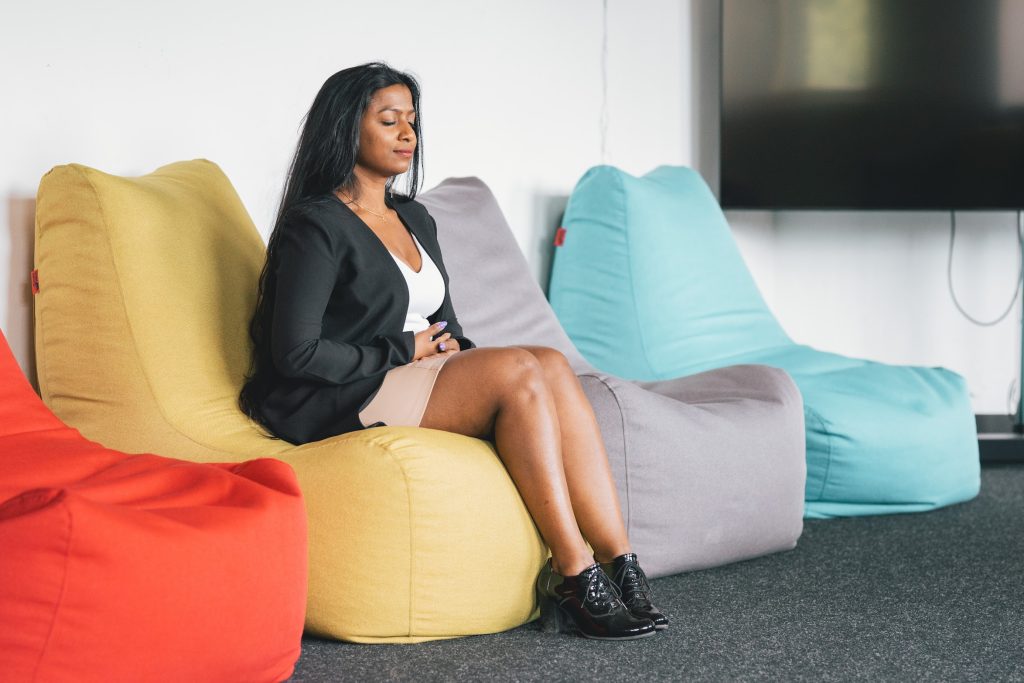
Europe can export balance—or import burnout
Europe is at a crossroads. With economic giants like the U.S. and China breathing down our neck, we can’t afford to relax and lag behind in productivity. But there’s a need for a balanced approach—no productivity gains should come at the expense of rising burnout rates and other health issues.
One solution to the problem would be to shift the manager’s mindset from “tracking for hours” to “tracking for health.” Time-tracking should be used to diagnose workload health and protect human focus, not to police the length of AI-assisted presence. True productivity in the age of AI is knowing when the tool has done enough and when the human should stop.

Did you find this article useful? Give it a clap!
Psst! You can clap more than once if you really loved it 🙂