Spain's 2026 time tracking reform

A new labor reform tightens Spain's time tracking rules, requiring digital, tamper-proof systems and changing how compliance is enforced.

SourceForge icon G2 logo Capterra logo
G2 Star rating 4.5/5 avg. (2000+ reviews)

A new labor reform tightens Spain's time tracking rules, requiring digital, tamper-proof systems and changing how compliance is enforced.

pages/time-tracking-law-spain.content.takeaways.alt

Key takeaways

Everything employers in Spain need to know about the upcoming changes, in one scannable list.

The reform builds on Spain's existing 2019 rules, but introduces stricter

Paper based systems will likely no longer comply. Companies will need digital, tamper proof time tracking.

Labor inspectors may gain real time, remote access to records, and fines are expected to increase, potentially targeting employees too.

The law is still moving through the legislative process, with a transition period expected once it passes.

What's changing under the new law

Spain's 2019 rules required tracking work hours. The 2026 reform goes further, focusing on how those records are kept, verified, and accessed.

The 2019 baseline

Employers have had to record each employee's exact start and end time since 2019. In practice, many still rely on paper, Excel, or systems that allow manual edits.

Mandatory digital systems

The 2026 reform is expected to require systems that are digital, tamper proof, and able to record time in real time, replacing paper and spreadsheets for good.

Real-time inspector access

Labor inspectors may gain remote, real-time access to records. This shifts enforcement from reactive to proactive, meaning employers will need systems that are accurate and inspection ready at all times.

Deadlines and the transition period

The reform is still moving through Spain’s legislative process, but the scale of the change means the smart move is to start now.

What we know so far

The proposed changes are still in draft and moving through the legislative process. A transition period is expected, giving companies time to comply once the new rules take effect.
Companies that delay preparation risk falling behind once the digital clock-in requirement becomes mandatory.

What to do in the meantime
  • Replace outdated systems

  • Implement digital tracking solutions

  • Update internal policies

  • Train employees and managers

What this means for employers

The new law turns working-time recording into a stricter compliance requirement. Informal or inconsistent methods will be harder to justify.

Reviewing current systems

Audit whether today’s method can produce accurate, verifiable records that hold up to inspection.

Standardizing across teams

Consistent, comparable records for every role and location, not a patchwork of spreadsheets and formats.

Manual & paper tracking is a bigger risk

Paper timesheets and editable spreadsheets are unlikely to meet the tamper-proof, real-time requirements.

Fines and enforcement risk

Fines are expected to increase and may also target employees, with a move toward proactive, always-on inspection.

How to prepare now

Even before the new law comes into force, there are practical steps you can take today.

Review your current system
Check whether your current method meets the requirements of the new working-time recording law.
Move away from manual tracking
Paper and spreadsheets are unlikely to comply with a mandatory digital clock-in law.
Define internal policies
Align your procedures with the expected requirements of the reform.
Train your team
Make sure managers and employees understand their responsibilities under the new law.

Spain’s law sits within the EU Working Time Directive

The reform builds on the wider European framework for recording and limiting working time. If you operate across the EU, the same principles accurate, auditable, accessible records—apply beyond Spain.

How can DeskTime help?

DeskTime is automatic time tracking software that gives leaders operational clarity over how their teams work, without adding admin, disrupting workflows, or relying on employees to log anything by hand.
Trusted by 730,000+ users since 2011, it's built to turn everyday work data into accurate, auditable records, the same kind Spain's 2026 reform will require.

Talk to our team

Planning to onboard a large team of 20+ users?

Schedule a chat with our product expert to learn how DeskTime can be tailored to fit your needs and requirements.

1
Fill out the form
Start the booking process with basic info about your company.
2
Schedule your call
Choose a date and time that works for you.
3
Answer a few additional questions
We want the call to be about you—so the more we know, the better!
4
All set!
You can relax and wait for the call.

It looks like you're using a personal email. Please provide a company email address.

Automate compliance and save time

Case study
How Skrivanek left paper timesheets behind

The translation company moved from manual and paper timesheets to automated tracking across its European offices, standardizing how working time is recorded and reported, and cutting the admin behind it.

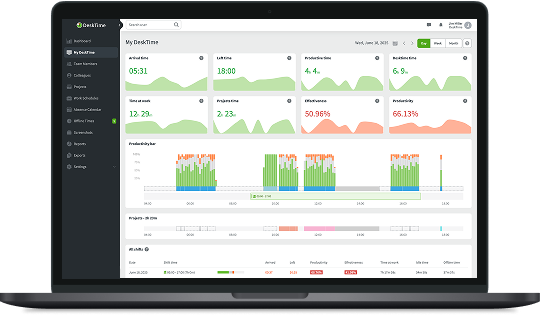
DeskTime is one way to meet the new requirements. It records working time automatically in the background, producing digital, tamper-resistant, real-time records that are exportable and inspection-ready, and consistent across every team and office.

  • Automatic, real-time digital records, timesheets fill themselves in

  • Auditable data with exportable, inspection-ready reports

  • One standardized system across teams, roles and countries

Built to meet global standards

DeskTime complies with top-tier international data protection protocols, delivering a secure and seamless time tracking experience trusted by teams big and small worldwide.

ISO 27001 compliant

Our practices align with ISO 27001 and ISO 27701 standards, ensuring robust information and privacy management across our systems.

GDPR compliant

The services provided by DeskTime and the data generated using the application comply with the rules set by GDPR.

Privacy policy

Visit our Privacy Policy to learn what data we collect, how we use it, and how we protect your privacy.

Data encryption

All data that DeskTime users share with our servers is encrypted both in transit and at rest by default.

Two-factor authentication

Users can add an extra layer of security to their account by enabling two-factor authentication in their profile settings.

Backups and reliability

With a system uptime of 99.95%, DeskTime ensures maximum reliability through continuous, restorable backups.

See how DeskTime supports compliance

Want to see the ins and outs before signing up? Explore our free demo account, no setup, no commitment.

Frequently asked questions about DeskTime tracking

It moves working-time recording toward mandatory digital systems that are tamper-proof or fully auditable, record time in real time, and are consistent across teams — with records that labor inspectors can access remotely at any time.
The reform is still moving through Spain’s legislative process. A transition period is expected once it passes, but given the scale of the change, employers should start reviewing their systems and processes now.
Fines are expected to increase and may also target employees. Enforcement is shifting from reactive to proactive, so records must be accurate, complete and inspection-ready at all times — not just when requested.
They’re unlikely to meet the new requirements. Paper records and editable spreadsheets don’t provide the tamper-proof, real-time, auditable trail the reform is expected to demand.
Yes. DeskTime records working time automatically in the background, producing digital, tamper-resistant, real-time records that are exportable and inspection-ready — and standardized across every team and office.
DeskTime is ISO 27001 & 27701 certified and GDPR compliant, with encryption in transit and at rest, two-factor authentication, and continuous backups. Reports export as audit-ready records for inspection.